


Buzzer Social Media Platform FZCO
Sheikh Rashid Tower, Floor 04,
Premises 407-FZF 131,
Dubai, United Arab Emirates
+971 58 296 9368



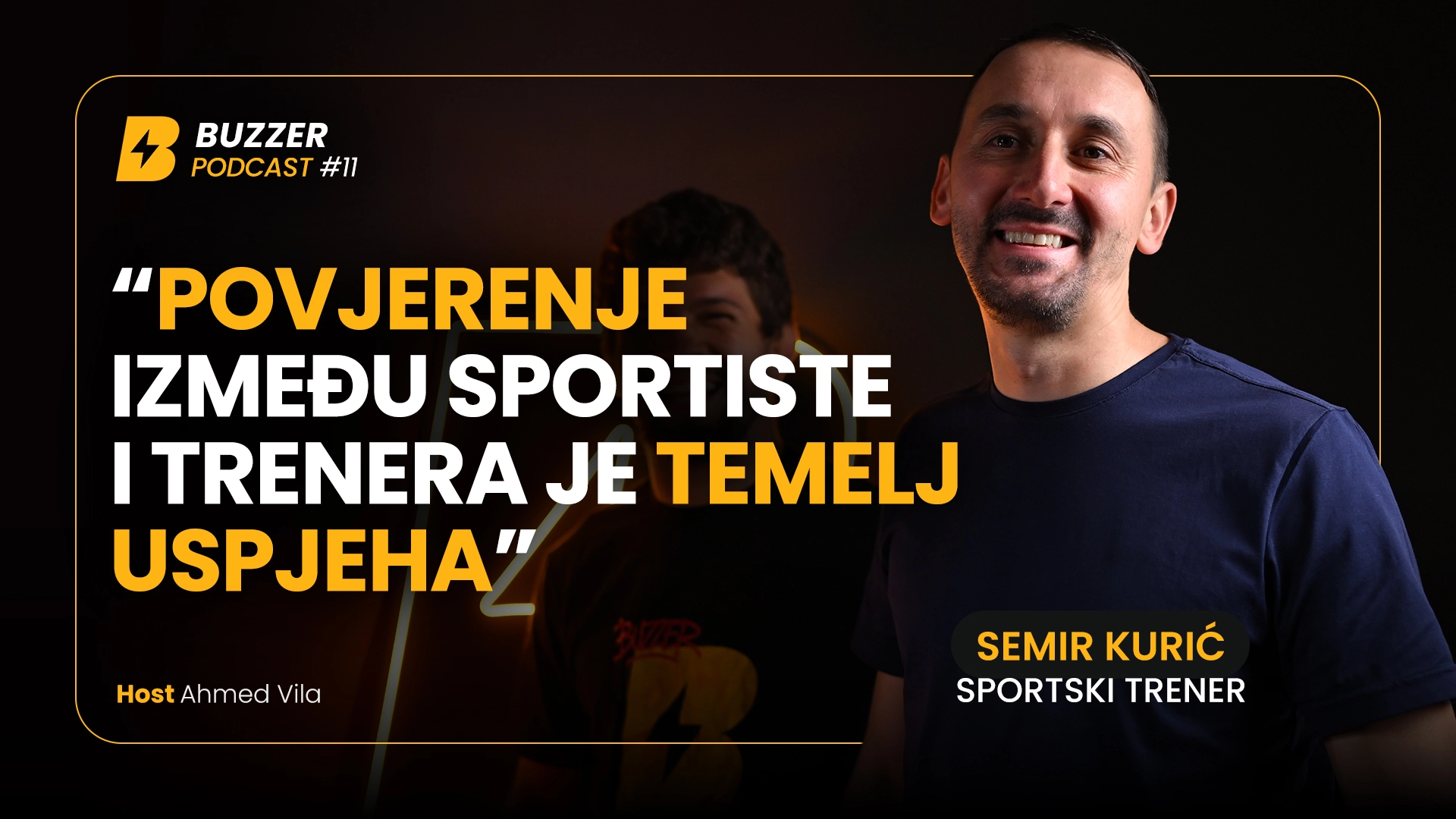
In the heart of Sarajevo’s CSRP Gym, one figure has become a quiet force behind the rise of many professional footballers, handball players, and combat athletes. Semir Kurić, a Master of Sports Science and long-time strength and conditioning coach, has spent more than a decade developing athletes whose careers increasingly depend on world-class physical preparation.
Unlike many modern trainers, Kurić avoids the spotlight. You won’t find him marketing “secret exercises” on social media or posting motivational content. His recognition comes from something far more valuable: the trust and results of the athletes who enter his gym.
This article explores his journey, his philosophy, and the principles he believes are essential for creating high-performing athletes in football and MMA.
Kurić joined CSRP Gym in 2013 as one of its earliest staff members. At that time, he worked mostly with recreational clients, studying the fundamentals of performance, experimenting with training systems, and investing years into observing how the human body reacts, grows, and adapts.
For roughly three years, Kurić avoided specializing in any sport. Instead, he focused on building a foundation of knowledge — reading, testing, researching, and refining. Over time, watching other coaches and seeing the long-term needs of athletes, he realized his direction: high-performance conditioning.
His transition into professional coaching happened gradually. A parent would bring one young player, then another. One athlete’s progress brought the next. Without chasing popularity, his name began circulating among football families, eventually reaching professional senior players.
Today, many of the region’s promising footballers have passed through his hands — not because of advertising, but because athletes recognize the depth of his approach.
In an era where many coaches rely on Instagram highlights, Kurić intentionally avoids it. He believes social media often creates illusions — flashy exercises, unrealistic expectations, and “magic tricks” that appeal to people who cannot distinguish between marketing and real methodology.
He argues that genuine performance cannot be packaged into viral videos. Instead, it grows through understanding, trust, and the long game of athlete development. Many athletes, including MMA fighters, later say that this authenticity is exactly why they choose to train with him.
Football is where Kurić first found his stride. Having played the sport himself, he understood its physical demands — repeated efforts, explosive actions, constant movement, and the vulnerability to injuries. This insight shaped his early focus on young players.
Working with children gave him something that many performance coaches never fully master: a long-term view of physical development. He learned how bodies evolve between ages 11 and 19, how coordination matures, how strength should be introduced, and how to identify which training method suits which type of athlete.
Many talented young players drop out before reaching senior levels — injuries, psychological stress, or lack of progression often cut their paths short. Kurić highlights this as a warning to parents and clubs: if years of private training lead nowhere, something in the system is broken.
That is why he prioritizes individualization, progression, and clarity — not hype.
Kurić emphasizes that performance training is not merely a series of exercises or standardized tests. It is a psychological relationship where both sides must trust each other.
Across football and combat sports, he consistently observes that athletes progress the most when this trust is strong. When confidence flows both ways, they push beyond limits they previously believed were fixed.
This is why he limits the number of athletes he accepts — not out of exclusivity, but because genuine high-level coaching requires time, attention, and connection.
Kurić’s recent work with MMA fighters highlights another dimension of his coaching philosophy: the physical and psychological demands of combat sports.
When a fighter enters the cage, the stakes are far higher than in team sports. Poor conditioning does not just mean bad performance — it can mean real harm.
For this reason, Kurić sees his role as partially a shield. His job is to ensure that fighters enter competition with physical readiness and mental stability, so doubt does not creep in when the door closes behind them. Fighters often describe this relationship as deeper than typical coaching — almost a partnership in survival.
One of the most recurring themes in Kurić’s experience is the impact of parents on young athletes. He views parents as the number-one factor in a child's eventual success — or failure.
Many parents, driven by emotion, unintentionally sabotage their child’s progress by:
Kurić stresses that children develop best when allowed to experience challenges without excessive protection. If a child knows a parent will always intervene, the motivation to solve problems independently disappears.
In combat sports, this is especially obvious: once the athlete steps into the cage, no parent can help them — and that reality must be understood early.
Beyond individual athletes, Kurić highlights deeper issues within the sports system in Bosnia and Herzegovina. Coaches often work in isolation rather than as part of a coordinated support team. Talent identification is inconsistent. Education systems rarely support young athletes with genuine potential.
He argues that real progress requires a mindset shift: strengthening athletes strengthens the entire coaching community, not the other way around. Collaboration, not ego, is what elevates a sports culture.
Until that happens, clubs risk keeping everyone at the same “average” level — limiting the growth of both elite and developing players.
Kurić often explains that every coach eventually faces a crossroads:
Do you train athletes to grow — or to make money?
He openly admits that financial stability matters. But if the goal is to develop children and guide athletes toward long-term success, the first requirement is honesty. He refuses to sell the idea that training with him guarantees success. Progress does not come from the trainer alone — it comes from the athlete’s own commitment, responsibility, and mindset.
This principle shapes everything he does.



.png)
.png)
%20(1).png)

%20(1).png)
.avif)
.png)


