


Buzzer Social Media Platform FZCO
Sheikh Rashid Tower, Floor 04,
Premises 407-FZF 131,
Dubai, United Arab Emirates
+971 58 296 9368




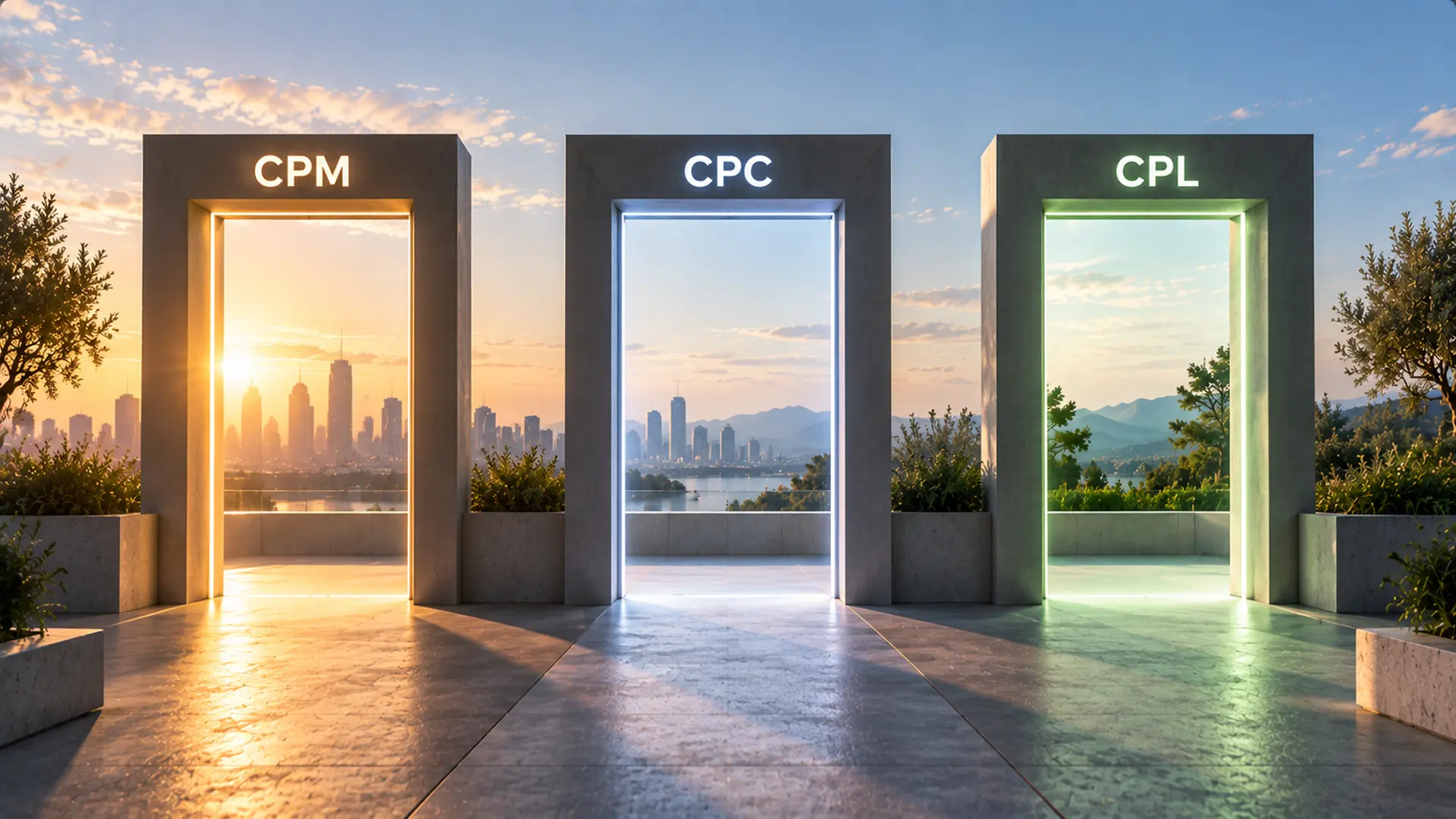
TL;DR: CPM charges per 1,000 impressions and fits awareness goals. CPC charges per click and fits traffic or lead-gen goals. CPL charges only when a real lead converts, and fits campaigns where the sale itself justifies a higher cost per result. None of the three is universally "best," the right one depends on what a sports brand is actually trying to buy: reach, action, or a completed lead.
The three models differ in exactly one thing: what triggers the charge. CPM (cost per mille) charges for every 1,000 impressions, regardless of whether anyone clicks. CPC (cost per click) charges only when someone clicks the ad. CPL (cost per lead) charges only when a defined action happens, typically a form fill or sign-up, regardless of how many impressions or clicks it took to get there.
That single difference changes who's carrying the risk. With CPM, the advertiser pays regardless of performance, so the platform carries less risk and the advertiser carries more. With CPC and CPL, the publisher has to actually deliver a click or a lead to get paid, which shifts more of the performance risk onto the platform.
CPM makes sense when the goal is reach, not action. Brand awareness pushes, product launches, and retargeting campaigns built around staying visible to people who already know the brand are the classic CPM use cases, and video and CTV campaigns commonly run on CPM by default.

Actual CPM rates vary enormously by platform, audience, format, and buying method, enough that a single "current benchmark" number would be misleading. What tends to hold across sources is the relative order: mobile display inventory generally trades cheapest, video sits above it, and premium CTV/OTT inventory trades highest of the three. CPM offers strong budget predictability since the cost is tied directly to volume, not to how the audience responds. The tradeoff is that the advertiser pays whether or not the impression actually converts, so it works best paired with strong historical data on how impressions in that category tend to perform downstream.
CPC shifts some of that risk to the platform, since payment only happens on a click. That makes it a better fit for traffic generation, lead-gen flows where a click leads to a form, and e-commerce campaigns sending people to a product page with clear intent.
Actual CPC rates swing widely by platform, competition for the audience, and creative quality, enough that a specific dollar range wouldn't hold up as a reliable benchmark. What's consistent across auction-based platforms is the mechanism: most charge the second-highest competing bid plus a small increment, rather than a flat published rate. The catch with CPC is fraud exposure, since bot-driven clicks or accidental taps can inflate cost without delivering a real, interested visitor.

CPL is the model to reach for when the actual goal is a qualified lead, not just traffic, and when that lead is valuable enough to justify a higher per-unit cost than CPC would ever charge. There's no reliable single "average CPL" worth quoting here. Cross-industry CPL studies get cited often, but they blend businesses with wildly different deal sizes and sales cycles into one number, which makes the average close to meaningless for any one advertiser. What we do know is that the spread between categories is large, often differing by an order of magnitude or more, and that the driver is almost always deal size and sales-cycle length rather than the ad platform itself.
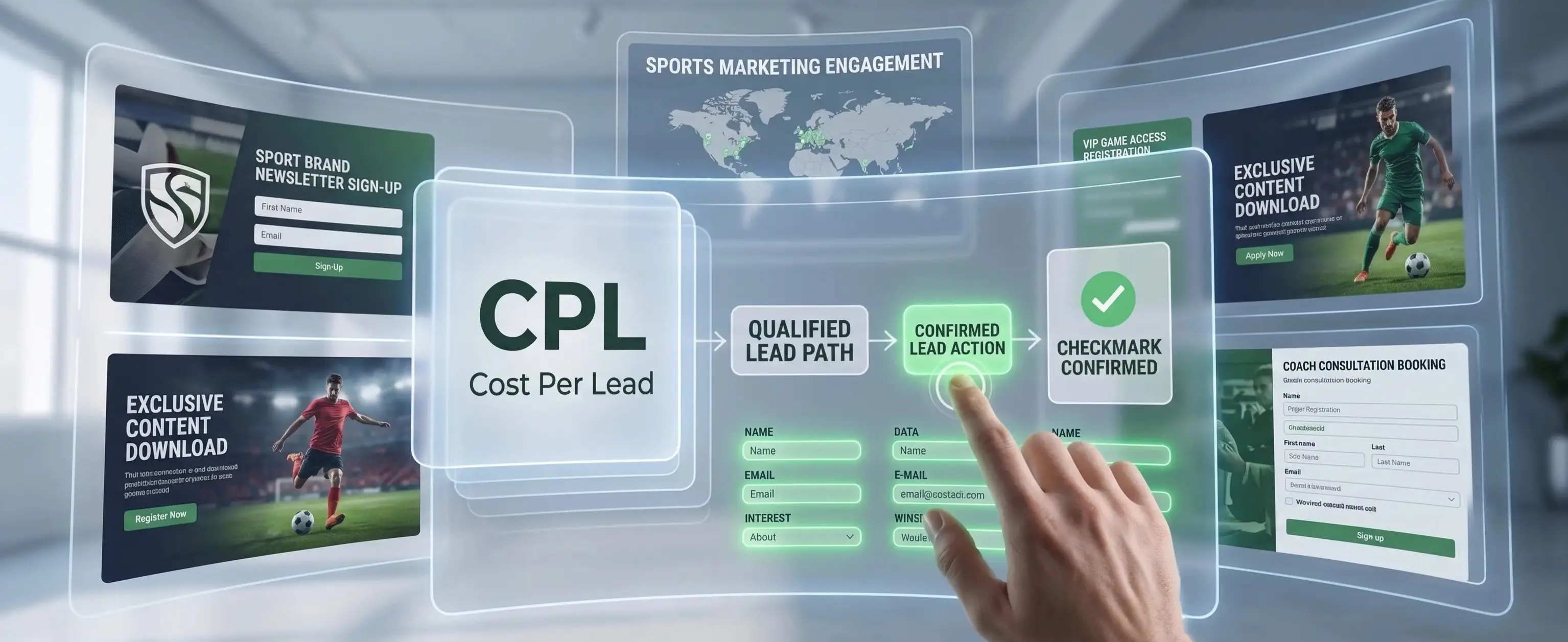
Channel matters too, and the direction is predictable even where exact figures aren't: referral and paid-social leads tend to run cheaper than leads sourced from content marketing or channels built around longer research cycles, since those channels are doing more trust-building work before the lead converts. For a sports brand running a lead-gen campaign, that means the platform and targeting matter more to the final CPL than any industry benchmark does.
The spread exists because CPL isn't really measuring cost, it's measuring how much trust-building a category needs before someone converts. Industries with larger deal sizes and longer sales cycles, like legal services or higher education, expect more sophisticated content and more touchpoints before a lead is ready to convert, and that pushes the cost of each lead up accordingly.
There's a second wrinkle worth knowing before comparing any CPL figure across sources: a low CPL isn't automatically a good CPL. Run the math on two hypothetical campaigns: one generates leads at $50 each with a 30% close rate, the other generates leads at $15 each with a 5% close rate. The $50 leads cost less per closed deal, even though the sticker price per lead is more than three times higher. The number only means something once it's tied to how many of those leads actually turn into something.
Exact dollar figures aren't included here on purpose. Published CPM/CPC/CPL benchmarks vary too widely by platform, audience, and buying method to present as a reliable universal rate, so this table compares the models on mechanics and relative cost order instead.
The right model depends on which objective a campaign is actually built around, not on which model sounds cheapest on paper. Buzzer Ads runs campaigns against six objectives: Awareness, Engagement, Traffic, Leads, App Growth, and Sales, and each one naturally pairs with a different pricing logic.
An Awareness campaign built around Arena live stream sponsorships or broad video reach behaves like a CPM buy, since the goal is exposure across a sports-first audience. A Traffic or App Growth campaign behaves more like CPC, since the value is in the click itself. A Leads campaign, especially one built around something like the sponsorship marketplace or a tryout sign-up flow, is where CPL logic applies, since the completed sign-up is worth paying a premium for over a raw click.
The objective comes first. The pricing model is just how that objective gets billed.
CPM, CPC, and CPL aren't competing models, they're three different questions about what's actually worth paying for: attention, action, or a completed lead. A sports brand running an awareness push around a major match doesn't need the same pricing logic as one running a sign-up campaign for a fan loyalty program, and picking the wrong one means either overpaying for impressions nobody acts on, or underpaying for leads that never had a real interest signal behind them.
Start with the objective, not the price tag, and the right model tends to follow. Once you know the objective, that also points you toward which ad format fits it best, since format and pricing model are usually decided together.
Set up a campaign with the objective that matches your goal in the Ads Console, or explore the full Buzzer Ads platform to see how sports-first targeting changes the math on all three models. For more on why that targeting matters in the first place, see why advertise to sports audiences.
Neither is universally cheaper, they're pricing different things, and published rate benchmarks vary too widely by platform and audience to make a fair head-to-head comparison. CPM charges for impressions regardless of clicks, while CPC charges only per click. Which one costs less overall for your campaign depends on your click-through rate: a low CTR can make CPM cheaper in practice, while a high CTR can make CPC more efficient.
There's no universal "good" number here, and cross-industry CPL averages you'll find cited online blend businesses with very different deal sizes and sales cycles, so they're not a reliable benchmark for any one advertiser. The more useful question is whether your CPL is sustainable against your close rate and the value of a converted lead, not how it compares to an industry average.
Because CPL is measuring a more valuable outcome. A click doesn't guarantee any further action, while a lead is a completed action you actually wanted (a sign-up, a form fill). Paying more per lead than per click is often the more efficient choice once you factor in how many clicks it typically takes to generate one lead.
Somewhat. CPM pairs naturally with reach-focused formats like video and live stream sponsorships, while CPC and CPL pair more naturally with formats that drive a clear next action, like in-feed native ads or sponsored content leading to a landing page or sign-up flow.
This depends on the platform's console capabilities. Generally, pricing model is tied to the campaign objective selected at setup, so switching models usually means adjusting the objective and relaunching rather than changing the pricing logic on a live campaign. Check your ad platform's specific console settings before assuming this can be done mid-flight.





.png)
.png)
%20(1).png)

%20(1).png)
.avif)
.png)


