


Buzzer Social Media Platform FZCO
Sheikh Rashid Tower, Floor 04,
Premises 407-FZF 131,
Dubai, United Arab Emirates
+971 58 296 9368




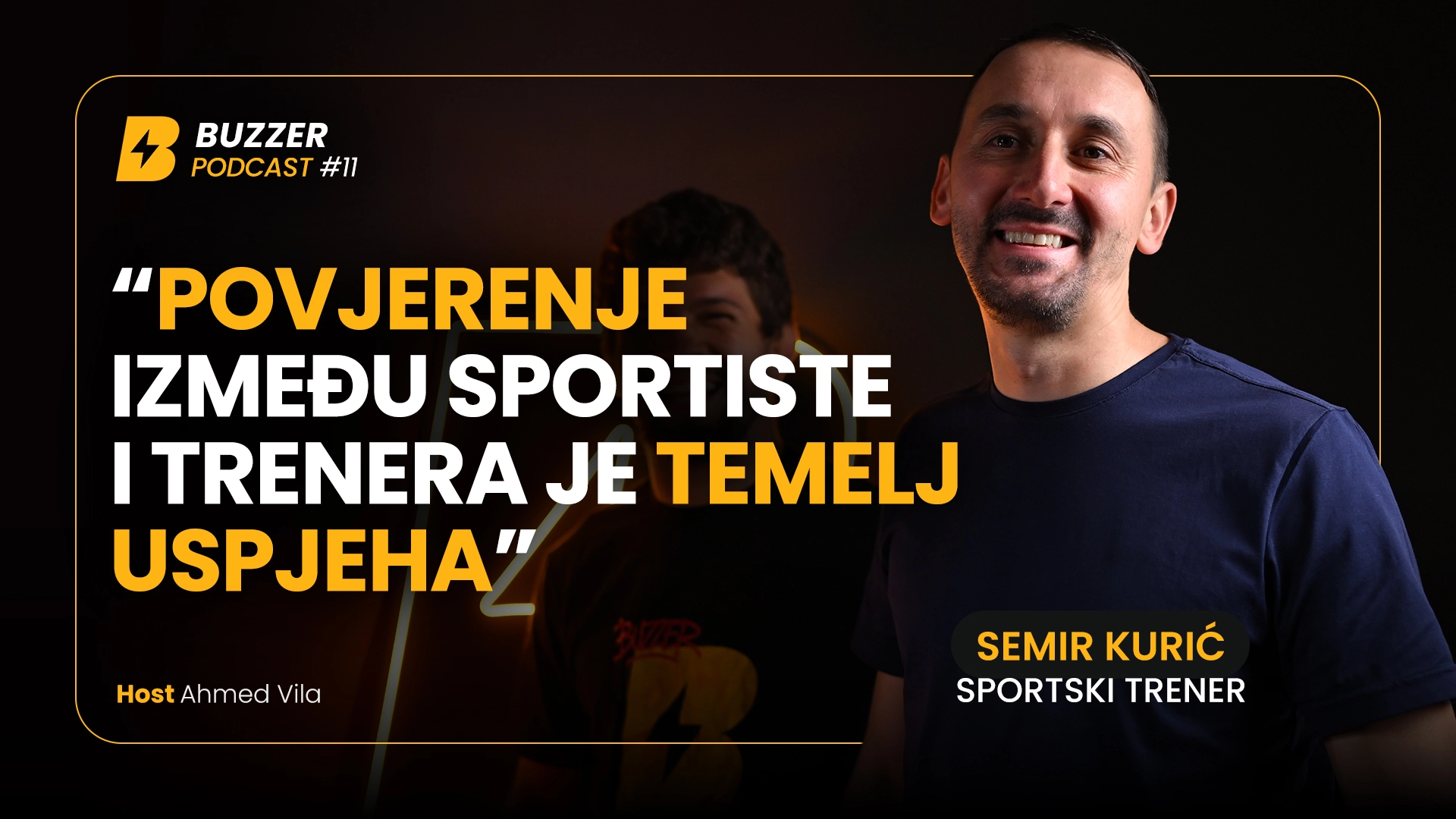
Although he is now best known for football conditioning and combat-sport preparation, Kurić’s first major breakthrough came in basketball — by accident.
He originally set his sights on working with football players after seeing a coach train a young footballer. The moment sparked his ambition. But his first real opportunity came when a basketball coach invited him to work with a youth team.
Walking into a gym full of players taller than him, he questioned whether he belonged there. Yet the experience opened an entirely new dimension of learning:
The basketball chapter became a formative period that sharpened his ability to analyze movement, understand sport structure, and personalize training programs — skills he later applied with great success in football and MMA.
A key theme throughout Kurić’s coaching journey is the importance of understanding the core structure of a sport. He argues that knowing exercises is not enough; a coach must understand why movements matter in real game scenarios.
According to him, athletes develop around 70–80% of their physical capacity within their regular team training.
The crucial remaining 20–30% — strength, power, explosiveness, injury prevention — must come from specialized conditioning.
The better a coach understands the demands of the sport, the more effectively he can fill that gap.
One of the strongest insights from Kurić’s experience is the difference between team-sport athletes and combat athletes.
In MMA or kickboxing, accountability is absolute.
You enter the cage alone.
No teammate can hide your mistakes.
You deal with the consequences — physically and mentally.
Footballers, especially youth players, often grow up with an opposite mentality. In team environments:
This contributes to what Kurić calls the “escape response” — choosing the easy way out instead of pushing forward.
He believes this mindset is one of the biggest obstacles for young footballers in Bosnia and Herzegovina.
Throughout the interview, Kurić repeatedly highlights parents as the key influence in shaping a child’s mindset.
Common issues he observes:
Children who grow up shielded from responsibility often struggle to compete aggressively or handle pressure at 18 or 19 — precisely when real football begins.
Kurić believes that Bosnia and Herzegovina is rich in talent — but poor in sport culture. Many young athletes:
He stresses that greatness requires a mindset similar to global icons. He cites the work ethic of athletes like Michael Jordan, who arrived early, stayed late, and asked his trainer after every game: “When is the next session?”
Bosnian athletes, he argues, too often lose momentum once they feel safe — financially, socially, or competitively.
Kurić notes that Bosnia’s most successful football icon, Edin Džeko, carved his own path abroad. While Džeko’s career is legendary, his exact development route was not replicated in Bosnia — leaving younger generations without a clear local blueprint for professional success.
If that path were studied and applied, he believes the country would produce far more elite athletes.
Although Bosnia and Herzegovina consistently produces highly gifted young athletes, Semir explains that many of them are unintentionally pushed toward mediocrity. A major issue stems from coaching environments where talent is “averaged out” to make trainers appear more successful. When everyone is kept at a similar level, standout athletes stop developing, and responsibility for progress is unfairly pushed onto the athlete rather than shared with the coach.
This culture encourages blame for everything—from sleep habits to phone usage—while rarely encouraging coaches to self-reflect or update their methods. According to Semir, real progress requires coaches to ask whether they themselves are improving and whether they can genuinely help an athlete move forward.
A recurring obstacle in Balkan sports development is the influence of ego. Many coaches are resistant to collaboration or to acknowledging the limitations of their knowledge. This mentality slows progress and prevents athletes from receiving well-rounded preparation.
By contrast, countries like Croatia and Serbia have built far stronger youth systems, producing players who are ready for major European leagues by age 17 or 18. Bosnia and Herzegovina often lags behind due to fragmented coaching pathways, misaligned priorities, and inconsistent developmental standards.
In MMA and other individual sports, athletes carry full responsibility for their performance. There is no opportunity to hide behind teammates or external excuses. This often creates a stronger mindset and a healthier approach to training.
Footballers, on the other hand, frequently grow up in environments where problems are solved for them—especially by parents—and where accountability is softened. This diminished competitive edge becomes visible once they transition to senior-level football, where expectations and pressure are significantly higher.
Social media delivers endless streams of training clips, speed drills, strength routines, and highlight edits. Semir emphasizes that while this content is visually appealing, it often lacks context about long-term development, correct progression, and risk factors.
This leads to two major problems:
Elite sport inevitably demands high-intensity work, heavy loads, and difficult physical challenges. Fear-driven training cannot produce high-level performers.
Regardless of sport, mastery comes from thousands of high-quality repetitions. Fighters rely on sparring and shadow work; footballers rely on the ball; basketball players rely on shooting volume. Semir stresses that athletes could safely train multiple times a day with proper structure, but this requires strong support from family and the athlete’s inner circle.
Behind every successful athlete, there is typically someone—parent, partner, mentor—who sacrifices heavily to support that journey.
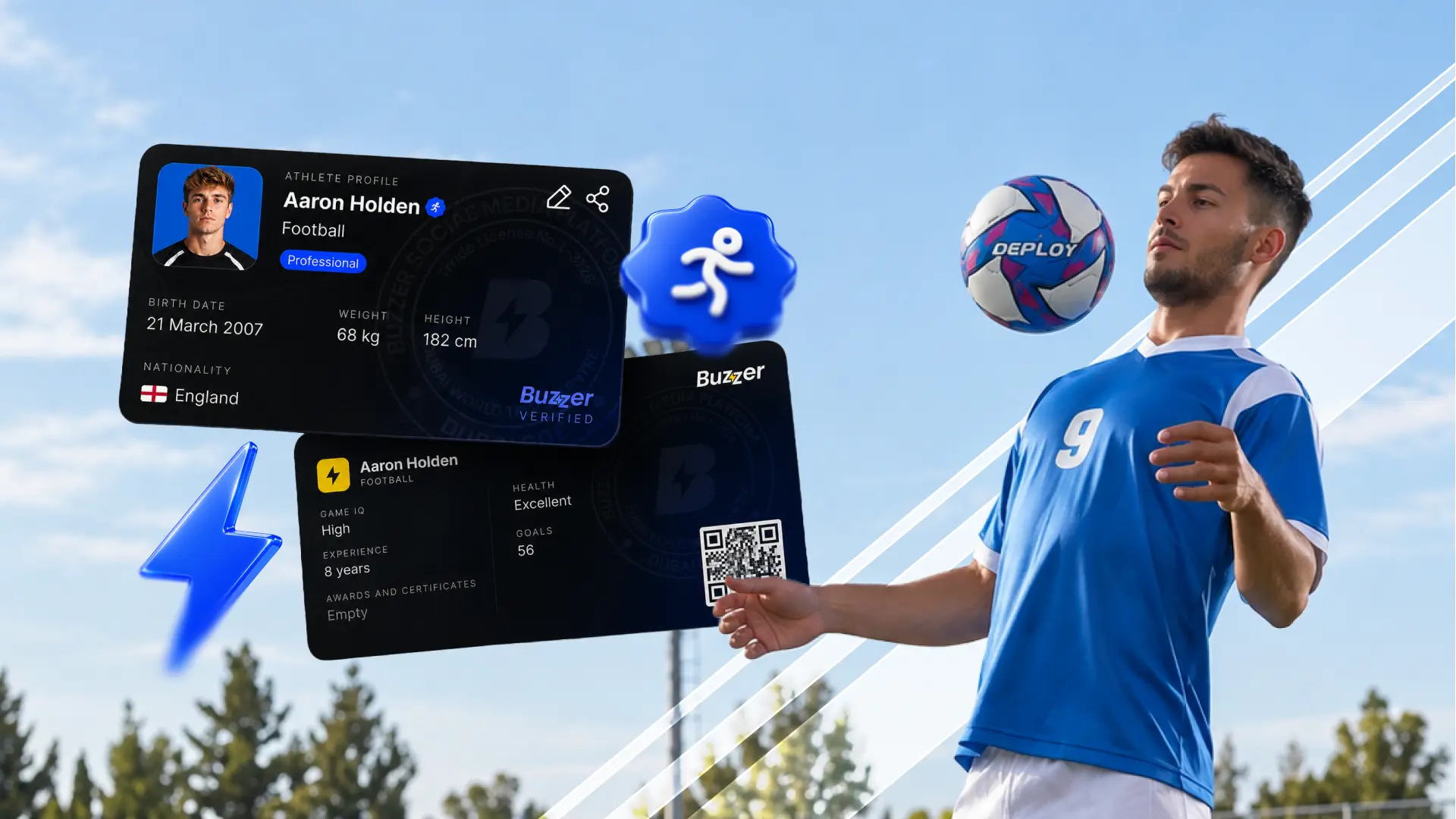
One promising concept highlighted in the discussion is Buzzer, a sports-focused social platform designed to connect athletes, coaches, and fans. Semir sees strong value in youngsters consuming content that motivates them, educates them, and pushes them toward better habits rather than relying solely on short-form entertainment platforms that deliver instant gratification but no long-term value.
A dedicated sports network could:
This, he believes, could become an important tool for shaping the future of sports in the region.
When asked about his personal goals, Semir emphasizes his desire to guide more athletes from Bosnia and Herzegovina into serious senior-level football and elite sports. His long-term vision includes:
His mission is not simply to train athletes but to help them mature into disciplined professionals capable of passing their knowledge on to the next generation.
The discussion ends on a hopeful note. Through initiatives like podcasts, coaching collaborations, and platforms such as Bazar, athletes, trainers, and managers are beginning to form a supportive ecosystem. By sharing knowledge and reducing ego-driven barriers, the entire sports community can elevate the next generation.
Bosnia and Herzegovina has the talent to reach European and global stages. What it needs is structure, transparency, stronger coaching culture, and a shift toward long-term developmental thinking.
If these changes take root, the athletes of today could inspire countless more tomorrow.




.png)
.png)
%20(1).png)

%20(1).png)
.avif)
.png)


