

Buzzer Social Media Platform FZCO
Sheikh Rashid Tower, Floor 04,
Premises 407-FZF 131,
Dubai, United Arab Emirates
+971 58 296 9368

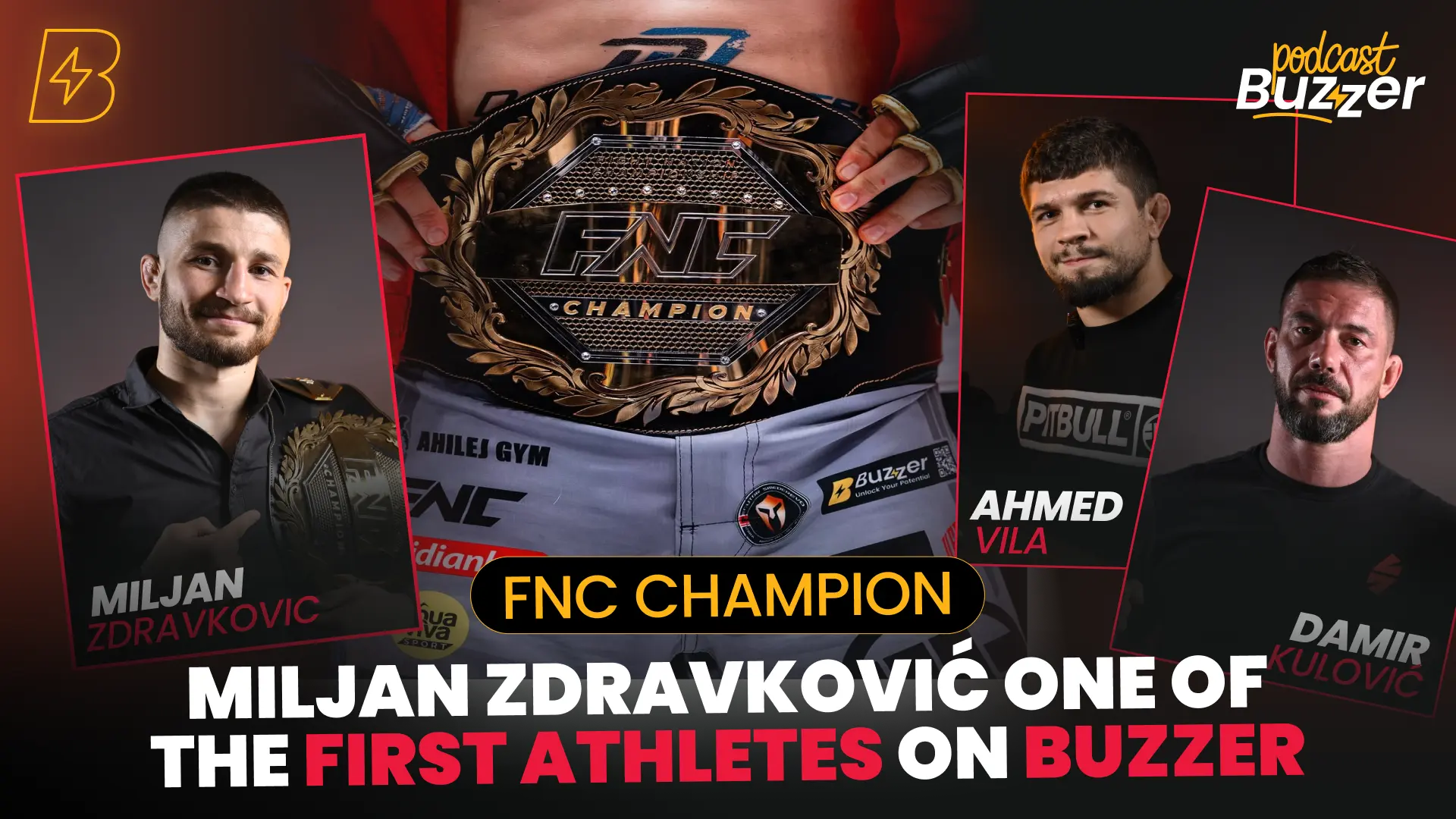
Miljan Zdravković, the FNC bantamweight champion, did not grow up in martial arts. He started at 18 years old, while working grueling jobs in Paris and his hometown of Lapovo, Serbia: vulcanizer, construction worker, bartender, security guard, farmhand.
"Stvarno radim, ono, od šesnaeste godine i, ono, zarađujem. Gde god sam stigao, ono radio sam stvarno sve živo. Ne znam uuu njivi, seno, drva, ne znam kao konobar, kao obezbeđenje, kao trener, ne znam kao vulkanizer u magacinu, građevina. Ne znam šta nisam ono radio..." (I really work, earning since I was 16. Wherever I went, I did everything alive. I don't know, in the fields, hay, wood, as a bartender, security, trainer, vulcanizer in a warehouse, construction. I don't know what I didn't do...)
This foundation of hard labor forged the mental toughness that defines him today. He balanced intense training camps with physically demanding work, often surviving on minimal sleep while meticulously preparing his own meals to maintain fight weight. This period, he insists, was the true crucible:
"Eto, to je to. Ja sam, ja sam tako tri godine radio. Znači, trenirao ujutru, ono u pet ujutro ustanem mrak, zimi hladno... Ako ti uspeš da balansiraš to, da radiš, da kažem da imaš neki privatan život i da treniraš ono punom parom, aa to je prava stvar." (That's it. I worked like that for three years. Meaning, training in the morning, getting up at 5 AM in the dark, cold in winter... If you manage to balance that, to work, to have a private life and train with full power, that's the real thing.)
Zdravković's FNC title victory came against a dangerous opponent: a Georgian wrestler with over 21 years of wrestling experience and more than a decade in MMA. The Georgian was considered a significant threat, particularly on the ground. However, Zdravković showcased the evolution of his game:
Complete MMA Display: Zdravković out-grappled him. He not only defended the Georgian's takedowns but also executed his own, showcasing improved wrestling. Crucially, he dominated the scrambles and positional battles on the mat.
Adapting & Overcoming: The Georgian did manage a takedown, a feat few accomplish against Zdravković even in training. Yet, Miljan remained calm, implementing the game plan meticulously crafted with his coach, Goran Ristić. He weathered the storm, used his jiu-jitsu to take the back, and secured a fight-ending rear-naked choke.
The Atmosphere: The FNC event in Belgrade was loud from the walkout, and Zdravković sang along with the fans. "Eto, baš kažem ono još me, još me grlo boli od, od, od eventa, iako je prošlo skoro dve nedelje." (I mean, my throat still hurts from the event, even though it's been almost two weeks.) Winning the FNC belt, he admits, brought a unique feeling: "Nisam mislio će toliko mi znači, ali stvarno je drugačiji osjećaj kad ti stave taj, taj pojas oko struka i kad ga poneseš kući i sa ljudima i slikanje." (I didn't think it would mean so much, but it's really a different feeling when they put that belt around your waist and you carry it home, with people and photos.)
Before FNC glory, Zdravković made a significant impact in KSW (Konfrontacja Sztuk Walki), Europe's premier MMA organization. Signing a three-fight deal, he entered as a relatively unknown but highly touted prospect. His KSW run was pivotal:
Underdog to Threat: Brought in as a "stepping stone" for Polish contenders eyeing a title shot, Zdravković shattered expectations. He scored back-to-back knockout victories against respected Polish fighters.
Silencing Doubters: His first KSW win was dismissed by some Polish media as a "Lucky Punch." Zdravković used this as fuel, reinvesting his earnings into elite training (traveling for multiple daily sessions across wrestling, boxing, and jiu-jitsu). His second KSW fight ended identically – another knockout with his right hand – proving his power and skill were no fluke. "Rekao OK, nema veze. Nešto zadnje vrijeme. Dobio sam da kažem neki novac. I onda sav taj novac ja sam uložio u svoje treninge..." (I said OK, no problem. Something lately. I got some money. And then I invested all that money in my training...)
Contract Decision: After two wins, KSW offered a new 2.5-year contract. Zdravković, alongside manager Ivan and coach Goran Ristić, made the strategic decision not to sign. The terms weren't ideal, and his ultimate goal wasn't just the KSW title – it was proving he was the best globally. "Ja u te dve i po godine ne bih mogao da, da kažem da izađem iz tog ugovora. Sad baš kad pričaš o tome, onaj, o FNC-u, odnosno o toj organizaciji u kojoj sljedećoj želiš da se boriš, to je najvjerojatnije UFC..." (In those two and a half years, I wouldn't be able to get out of that contract. Now when you talk about it, about FNC, or the organization you want to fight in next, that's most likely the UFC...)
Central to Zdravković's rise is his head coach, Goran Ristić. More than just a coach, Ristić has been a mentor and father figure, guiding Miljan through both sporting challenges and personal life. Zdravković credits Ristić with:
Tactical Genius: Ristić possesses an uncanny ability to predict opponents' strategies and game plans with remarkable accuracy. "Za ovih devet mečeva koje sam imao, on je čovjek koji je predvidio svakog protivnika... I stvarno je bio ono precizan do, do, do, do nevjerovatnih detalja..." (For these nine fights I've had, he's the man who predicted every opponent... And he was really precise down to, down to, down to unbelievable details...)
Building the Foundation: Ristić has been with Zdravković since the beginning, fostering a mindset of humility, constant learning, and adapting from mistakes. Their partnership is built on mutual respect and a shared vision.
Holistic Support: Ristić provides support beyond the gym, helping navigate the pressures of being a professional athlete and public figure.
Zdravković went from a vulcanizing shop in Lapovo to the FNC title in Belgrade. He beat a veteran wrestler, won twice by knockout in KSW, and has his sights set on the UFC. Hear more from him in part 2 of the interview.