


Buzzer Social Media Platform FZCO
Sheikh Rashid Tower, Floor 04,
Premises 407-FZF 131,
Dubai, United Arab Emirates
+971 58 296 9368



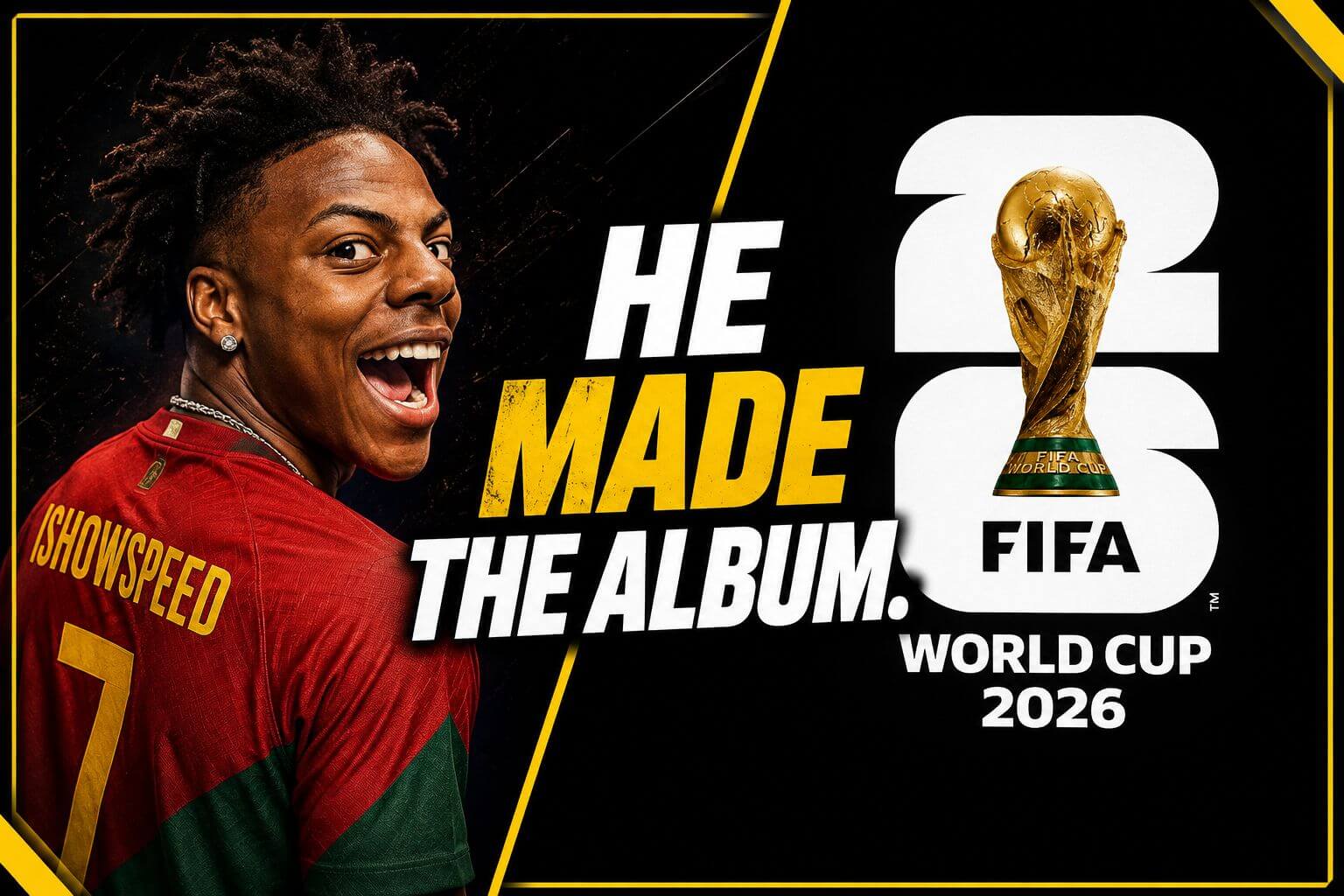
FIFA slid into his DMs … yep, that’s right.
"We heard it. We liked it. It's on the Official FIFA World Cup 2026 Album."
IShowSpeed read that message live on stream; of course, he jumped on his bed, did a backflip, and … you guessed it, went on to hit the Ronaldo Siuuu. Normal Tuesday stuff for a 21-year-old who just got his song placed next to Shakira and The Rolling Stones on what’s arguably the biggest music project in world football.
But here is the thing. FIFA didn’t just wake up feeling generous; they were just being smart. And the difference opens up a different conversation that most people seem to miss. But let’s begin by circling back for a bit.
On June 1st, Speed dropped "World Cup (Champions)," which is what it sounds like: a world-cup themed music video, but with no label backing, no FIFA partnership, no marketing budget. Just a music video filmed in Miami, a Ronaldo jersey (no surprise), and 48 nations' worth of flags and dancers. Typical IShowSpeed stuff.
Then the internet did the rest.
Within 24 hours, the track had generated massive traction across TikTok, X, and Instagram, with some fans claiming it did a better job capturing the spirit of the tournament than the official FIFA anthems. And what does Speed do? Tags FIFA publicly and asks them to make it official.
FIFA actually got back. They messaged him directly and confirmed the track was going on the official 2026 World Cup album, which, to be fair, is quite a project. Shakira is headlining the FIFA World Cup final halftime show alongside Madonna and BTS at MetLife Stadium on July 19.
It’s safe to call this the most commercially significant World Cup in history. And right there in the middle of all of it is a YouTuber who wrote his own song and asked nicely.
The viral claim is that Speed's track pulled 120 million views across different platforms in 24 hours, easily beating Dai Dai's reported 70 million on its first day. But those exact numbers have not been verified by official platform analytics.
Here is what we can say with confidence based on patterns we’re seeing online. Fans across TikTok and X are completely split, with many saying Speed came in "at the 90th minute and cooked the entire FIFA lineup that was officially listed." Others say Shakira's World Cup legacy is simply goated no matter what the numbers look like.
But there’s something else that complicates the comparison even further, and that’s the fact that both songs were released under completely different strategies for their marketing campaigns. The initial anthem rollout followed the traditional route, whereas Speed's relied entirely on creator-driven engagement and viral sharing.
So the numbers argument is somewhat messy to be fair. As for the cultural argument, that’s a whole different story. According to many listeners, "Champions" captures the spirit of the event better than the official FIFA anthems, and that is coming not just from Speed’s existing audience, but football fans as well.
Here is the part that most coverage is missing.
The 2026 FIFA World Cup will likely be the first men's tournament in which many younger fans will experience much of it through creators rather than broadcasters. That shift has been building for years; most people, particularly fans, noticed it, but football institutions were slower to accept it because traditional football media still held most of the authority, access, and distribution power in the sport.
FIFA did not add Speed to the album because they liked the song. They added him because they had no strategic choice.
FIFA has already announced a deal with YouTube to broadcast the first 10 minutes of World Cup matches live on the platform, with the main aim of capturing Gen Z viewers. Their own post-tournament data showed the 2022 World Cup Final generated 621% more social media engagements than the 2018 Final. They know where the audience is going. So when Speed came out with a song, it wasn’t a problem to manage but a signal to act on. And they did.
This was FIFA explicitly embracing an entertainment-driven model to maximize global pop-culture reach, and while at it intentionally blurring the lines between elite sports and global entertainment spectacles to capture non-traditional sports viewers.
So, putting a YouTuber's track on the official album is not a departure from that strategy as it might appear to be at first. Rather, it is the strategy.
We wrote about this when Soheil Var brought Palm City FC to Europe for open tryouts. A guy who was once told "we don't take the guy with the camera," went on to build his own club instead, won the league and UAE FA Cup, and ended up with one of the most talked-about football stories coming out of the Middle East.
Speed's story is the same pattern; it’s just the industry that’s different. He spent years following football across the world, getting chased off pitches, going viral in stadiums, building an audience that nobody in the traditional sports media took seriously. And here he is getting DMs from FIFA and bending them to his will.
The gates do not close again after something like this. Once FIFA has publicly invited a creator in through the front door, the argument that "real" sports content only comes from established media is over.
And that matters to us at Buzzer specifically, because it is exactly the world we were built for. Sports communities do not wait for broadcasters to tell them what to care about anymore.
The album dropped June 5th, just six days before the World Cup kicks off on June 11th.
Will Champions be played in stadiums? Will FIFA use it in official broadcasts alongside Dai Dai? Those questions are still open. But the more interesting question is what happens at the next tournament. Perhaps the next creator will not even have to ask?
At Buzzer, we see this every day. Sports communities don’t wait for broadcasters anymore. They find it, share it, make it real. IShowSpeed’s song on the FIFA album is just the most visible version of something that’s been happening for years.




.png)
.png)
%20(1).png)

%20(1).png)
.avif)
.png)


