


Buzzer Social Media Platform FZCO
Sheikh Rashid Tower, Floor 04,
Premises 407-FZF 131,
Dubai, United Arab Emirates
+971 58 296 9368




TL;DR: A sports sponsorship platform is a tool brands use to find, buy and measure sponsorships and sports media placements. Estimates put the 2026 sports sponsorship market between about $75 billion and $100 billion, depending on who defines it, but all show steady growth. Before choosing a platform, check its inventory, how audiences are verified, what reporting you get, who approves rights, and what it charges.
Say "sports sponsorship" and most people picture a logo on a shirt. That picture isn't wrong. But the way brands buy sponsorship is changing, and sports sponsorship platforms for brands are part of why.
The market itself is large, and the estimates disagree. The Business Research Company values it at $74.59 billion in 2026, growing 6.6 percent a year to $96.45 billion by 2030. Mordor Intelligence puts 2026 at $99.52 billion, growing nearly 8 percent a year.
Different definitions explain the gap. The direction doesn't differ: up.
This guide explains what a sponsorship platform does, how it differs from traditional deals, and what to check before you pick one.
A sports sponsorship platform is a tool that helps brands find, buy and measure sponsorships and sports media placements. Some work like marketplaces that list athletes, clubs or events. Others work like ad platforms, where you set an objective and budget and the placements are bought for you. What they share is a shorter route from "we want to be in sport" to a live campaign.
Some tools only measure. A sponsorship analytics platform tracks exposure and media value across deals you've already made, while a marketplace or ad platform sells you the placements. Work out which job you need done before you compare products.
The label is loose, so judge each product by what you can actually buy or measure on it.

Between about $75 billion and $100 billion in 2026, depending on the source. The two estimates above use different scopes, which is why neither is wrong. A regional figure helps anchor them: the European Sponsorship Association counted EUR 24.79 billion of sport sponsorship in Europe in 2025, out of EUR 34.45 billion for all sponsorship, as reported by Mordor Intelligence.
Use these numbers for direction, not for forecasting your own results. Spend is rising, but that tells you nothing about whether your sponsorship will pay back. If you're sizing a first test, the market total matters far less than the cost per result you can measure.
Most platforms offer some mix of four things:
Take a sports-nutrition brand that wants reach in three countries during a tournament. Through a traditional rights deal, it would negotiate fees and activation with a team or event. On a self-serve platform, it picks an objective, chooses the three countries, funds a live-stream sponsorship plus some athlete content, and watches impressions and clicks by country as the matches play.
The rights deal buys association. The platform campaign buys measured reach. That's an illustration, not a case study, but it shows where each fits.
Traditional sponsorship means buying rights from a team, league or event, usually through the rights holder or an agency: naming rights, shirt and kit slots, stadium signage. A platform adds a self-serve layer on top, where you buy activation and reach in smaller pieces and track it in one place.
They don't compete. Rights deals buy visibility and association. A platform buys measurable reach. Many brands do both, and use the platform to test sports before committing to a rights deal.

Check five things: what you can actually buy, how audiences are verified, what the reporting shows, who approves rights and content, and how fees work. A platform that dodges any of the five is selling visibility, not accountability.
Walk away if the platform can't show a sample report, can't say where its audience numbers come from, sells only static logos, hides its fees or has no campaign results it can share.
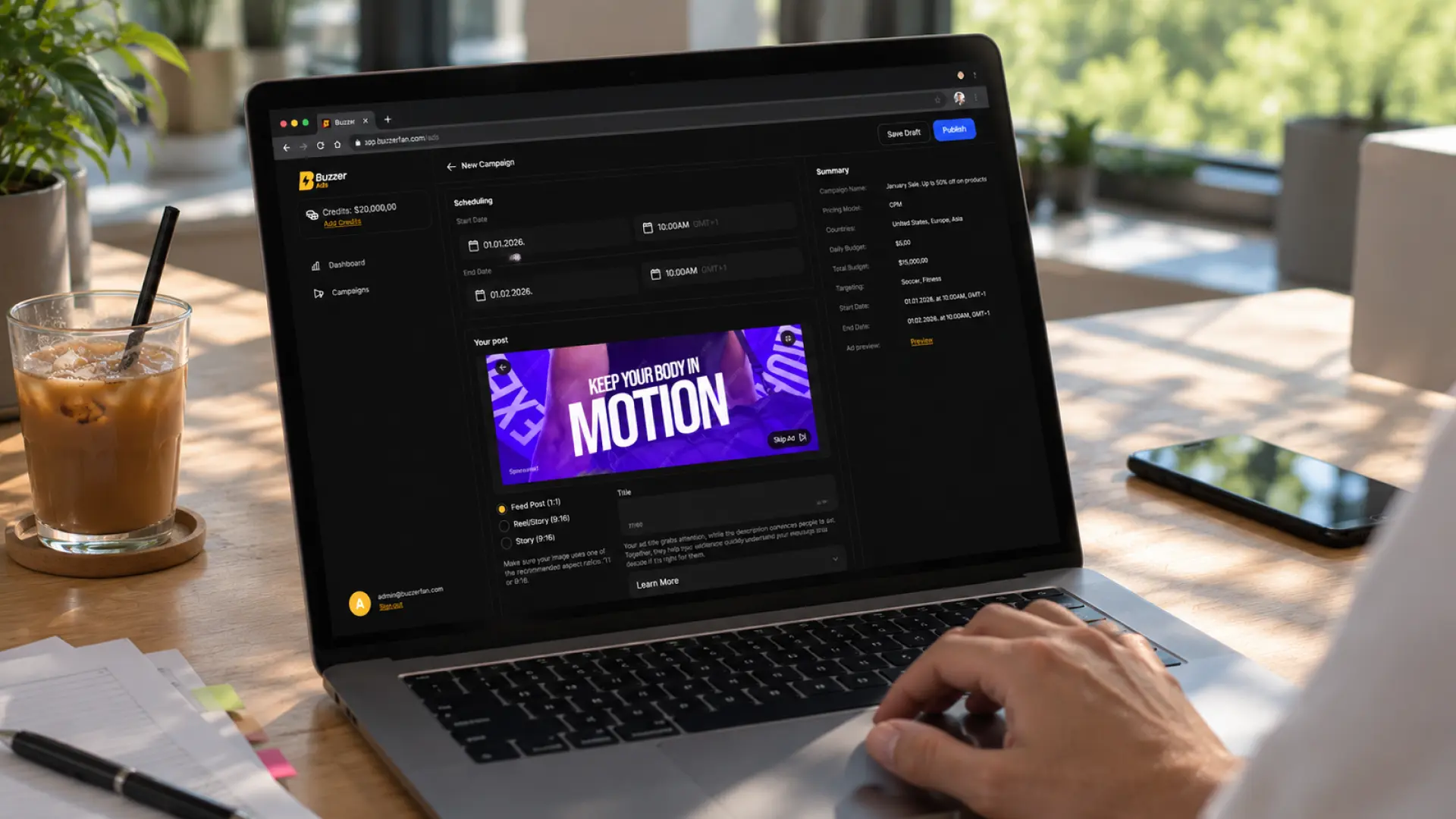
Buzzer Ads is a self-serve sports advertising platform that buys sponsorship-style placements like an ad campaign. Brands choose an objective, target sports fans by country, interest and fan behavior, set a budget and pay by CPM, CPC or CPL. Inventory includes Arena live-stream sponsorships, Sponsored Athlete Content, native feed ads, video and stories, and the Ads Console reports spend, impressions, clicks, CTR, reactions and performance by country.
For clubs and academies, the Organization Badge page lists access to sponsorship opportunities among its features.
To see how a sports-first campaign is set up and measured, explore Buzzer Ads. For athlete-side content, read our guide to athlete influencer marketing.
A sports sponsorship platform is a tool brands use to find, buy and measure sponsorships and sports media placements. Some work like marketplaces, others like ad platforms with an objective, budget and reporting.
Traditional sponsorship buys rights from a team, league or event, often through an agency. A platform adds a self-serve layer where you buy activation and reach in smaller pieces and track results in one place.
Estimates vary by source. The Business Research Company puts 2026 at about $74.6 billion, and Mordor Intelligence at about $99.5 billion. Both project steady growth, because each defines the market differently.
Some platforms list clubs and academies. Check how clubs are verified and what rights you actually get. Buzzer's Organization Badge page lists access to sponsorship opportunities among its features for clubs.
Match the metric to the objective: reach and impressions for awareness, reactions for engagement, clicks for traffic, and conversions for leads or sales. Agree the metric and the reporting schedule before you sign.




.png)
.png)
%20(1).png)

%20(1).png)
.avif)
.png)


