


Buzzer Social Media Platform FZCO
Sheikh Rashid Tower, Floor 04,
Premises 407-FZF 131,
Dubai, United Arab Emirates
+971 58 296 9368




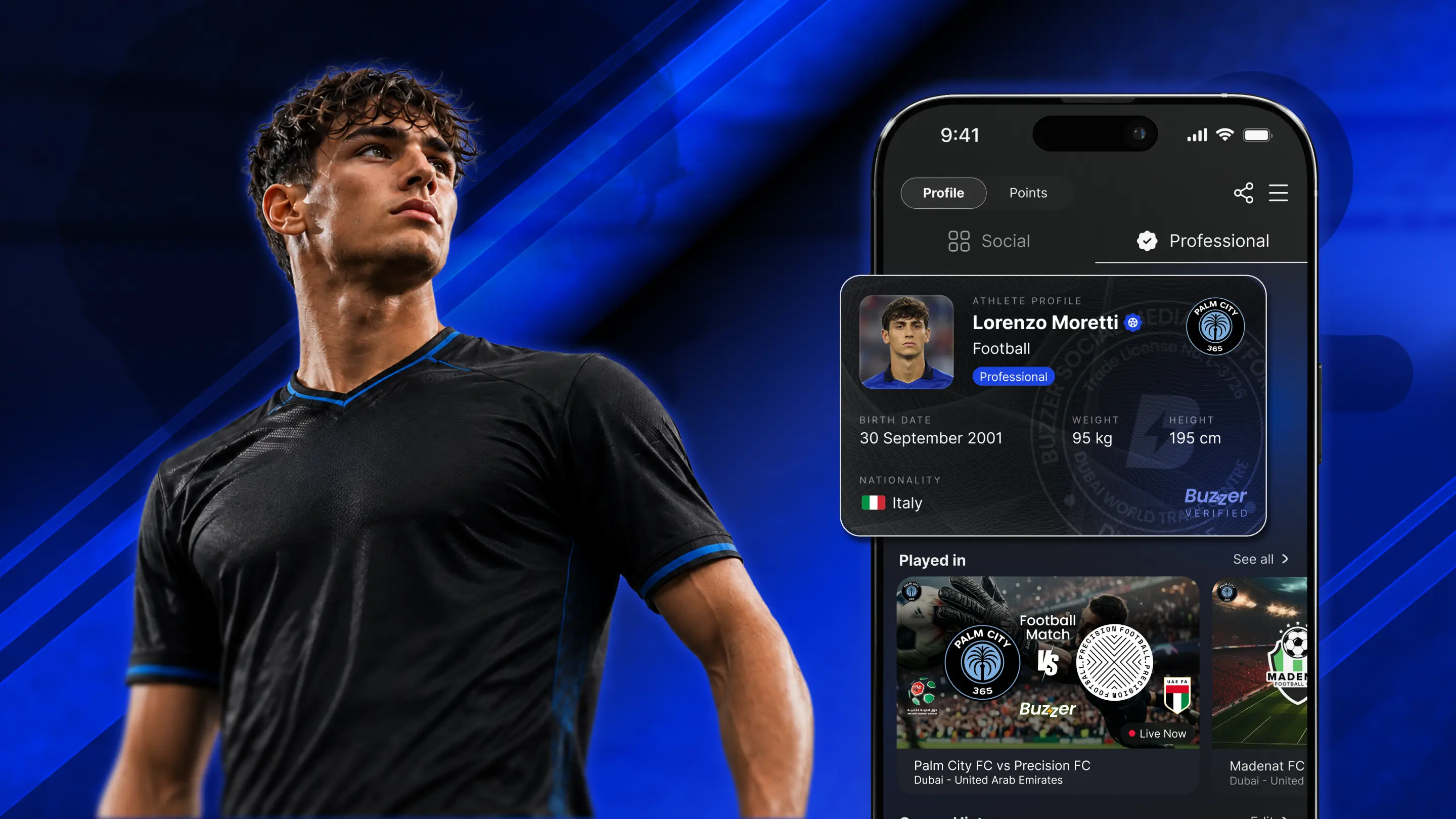
TL;DR: A player CV used to mean a one-page PDF, whatever sport you played. A digital player CV is that same idea rebuilt as a live profile. Your matches, stats, and history in one place, easily updated every time you play. It gives a scout or college recruiter something they can check, not just something you typed. And it works the same way whether you're a footballer, a basketball player, or competing in a different sport entirely.
A player CV is the document, or profile, that shows your sporting history. Club or team, position, stats, video.
A digital player CV is that same information built as a live online profile instead of a file. It updates on its own as you keep playing, instead of going stale the moment you export it.
Most athletes still build a player CV the old way. A template, a headshot, a few stats typed in by hand.
It looks fine sitting in an inbox. It's also frozen the second you hit save, and nobody reading it can check whether it's still accurate.
A digital player CV is different because it's a profile, not a printout. Player CV and player resume templates give you a layout: header, playing history, physical stats, a personal statement. They're built to be filled in once and exported.
That's the problem. Play your next match, game, or fixture, and the PDF is already out of date.
You rebuild it, re-export it, resend it. There's no guarantee the scout who had the old version ever opens the new one.
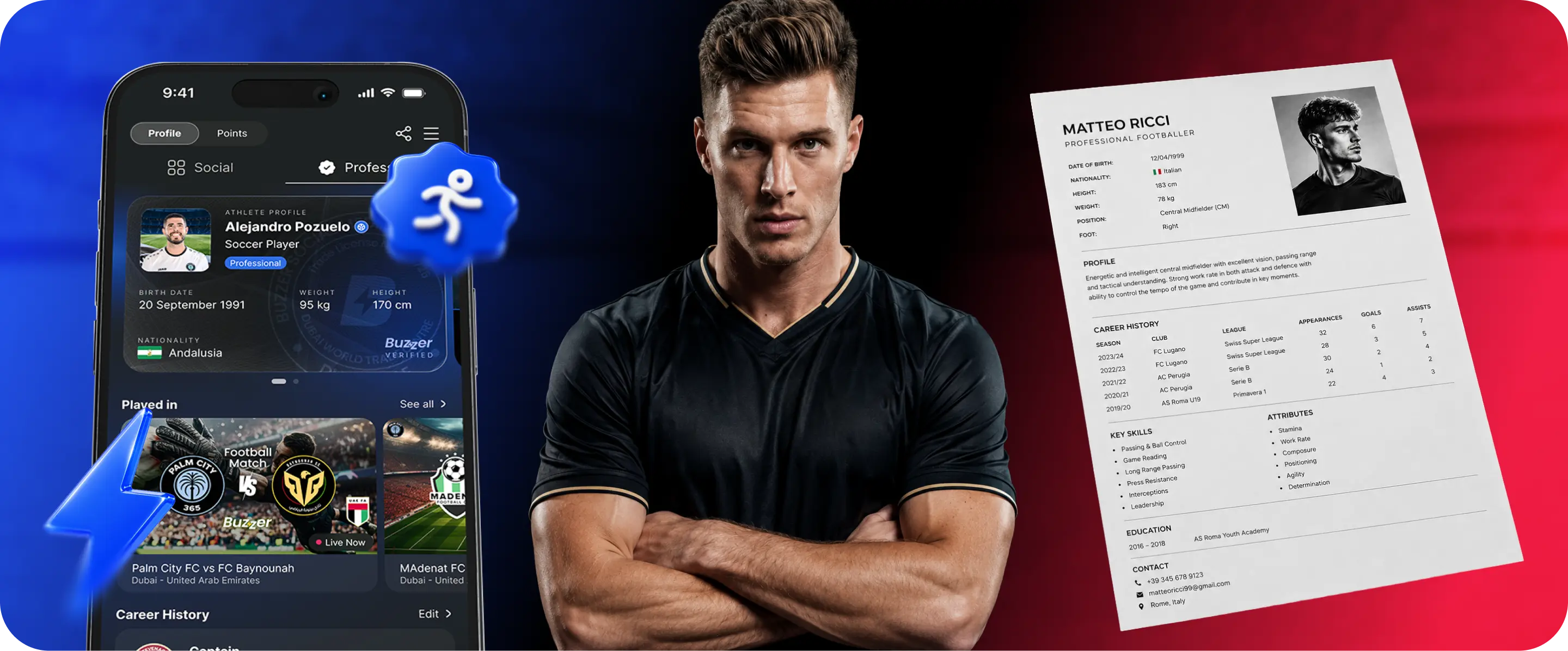
A living player profile skips that step. New match, new stats, same link. A scout checking ten athletes doesn't want ten PDFs in ten formats. They want one place that's actually current.
Yes. The concept doesn't depend on which sport you play.
A digital player CV works the same way whether the stats being tracked are goals and assists, points and rebounds, tries and tackles, or runs and wickets. What changes is which numbers matter. What stays the same is the format: a live profile instead of a static document.
That's the gap in most player CV tools right now. Search for a basketball player CV, a rugby player CV, or a cricket player resume and you'll mostly find generic resume templates built for job applications, not sports-specific profiles built to be checked by a scout or recruiter.
A digital player CV closes that gap regardless of sport.
The clearest published research on this comes from football scouting specifically, but the underlying pattern holds across sports.
Scouting runs on a mix of tools, and which one gets used depends on the level. Video analysis platforms cover leagues and competitions where matches get recorded professionally. Grassroots and academy scouting leans on lighter tools built for exactly that coverage gap.
Here's the part most athletes miss: the big professional platforms only show players whose league or competition has a data partnership. If yours isn't covered, which is true for most grassroots and academy-level competition, you don't show up on them at all.
Waiting to be added isn't a strategy, in football or anywhere else.
That's exactly why a self-built profile matters. It doesn't depend on your club or league having a data deal with anyone. You control whether you're visible, not your competition's contract status.
If you're building a resume for college sports recruiting, whether that's soccer, basketball, or another sport entirely, the stakes are different from getting noticed by a pro academy.
College coaches are working through hundreds of prospects at once, often from countries they've never scouted in person. A static resume tells them what you claim. A digital profile lets them check it.
A high school soccer player resume built as a live profile can show verified stats across seasons, not just the one year you happened to update the PDF. It can carry match footage a coach can watch directly instead of requesting a highlight reel by email.
For international athletes trying to get on a college's radar, that's often the difference between getting a reply and getting ignored.
A strong digital player CV covers the same ground a good player resume always has, just kept current instead of frozen in time, regardless of sport:
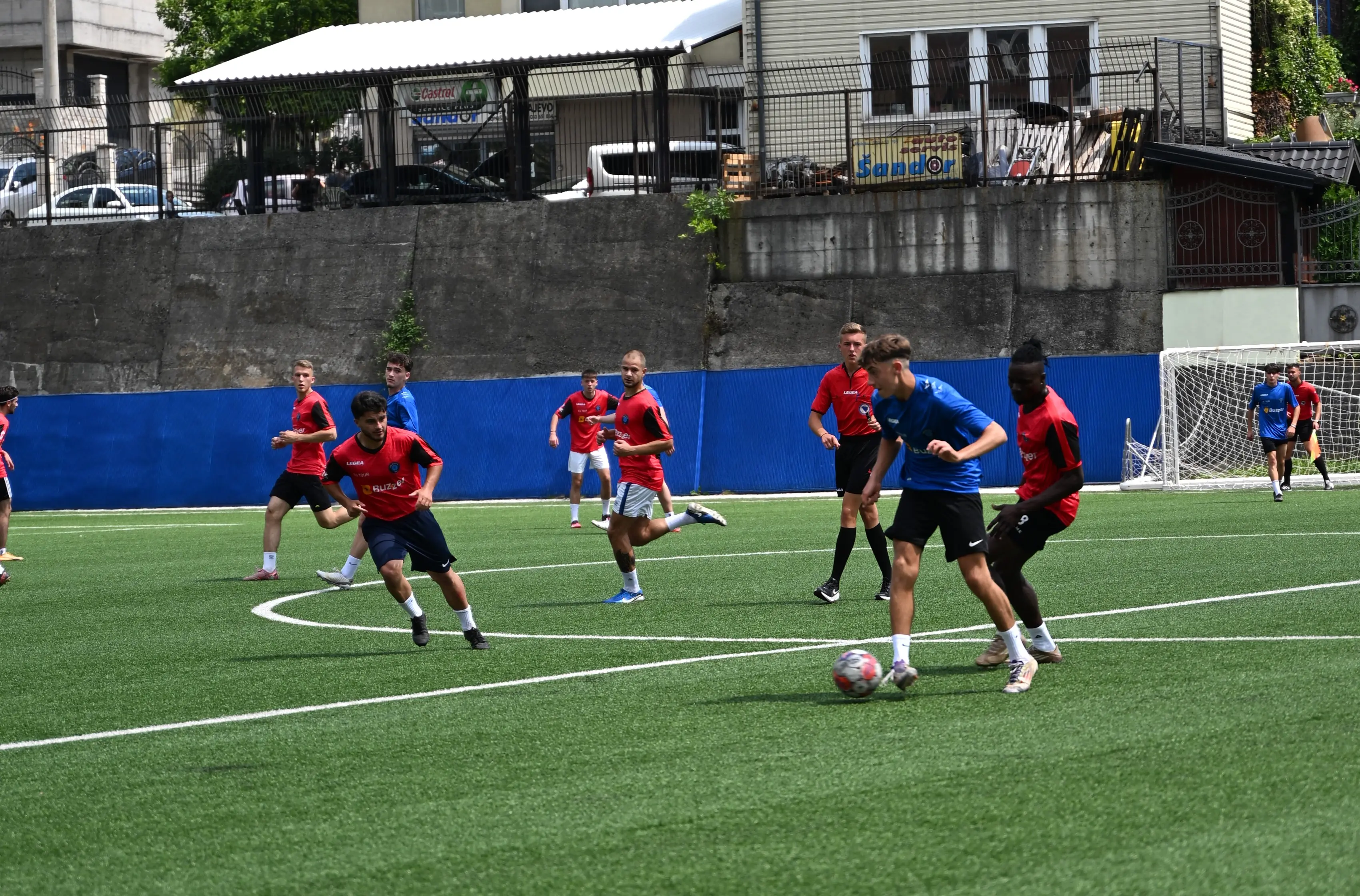
Two football players from Bosnia, among several others from the Palm City Europe Tryout Tour, got selected for a fully covered Dubai trial with the first team straight through their Buzzer profiles. No agent, no manager, no personal connection involved.
That's the entire point of a digital player CV. It did the work a PDF sitting in someone's downloads folder never could. The same principle applies to whatever sport you play.
Think of it as LinkedIn, but purely for athletes. Nobody rebuilds their LinkedIn from scratch every time they finish a project. It just updates.
A digital player CV works the same way. Play a match or game, the profile reflects it, and every scout or recruiter looking at that link sees the current version, not whatever you exported six months ago.
That's the shift. A player CV you send is a snapshot. A profile someone can check is proof.
No. A template is a document you fill in once and export. A digital player CV is a live profile that updates as you keep playing.
Yes. The format works the same way for basketball, rugby, cricket, or any sport, since it's built around your stats and video rather than sport-specific fields.
Some clubs and college programs still ask for one, so it's worth having. A digital profile is what makes that document verifiable instead of just a claim on paper.
Depends on the platform. A profile built on a network scouts actually use can surface you directly, not just when you send a link.
Build your Athlete Badge profile at app.buzzerfan.com, add your playing history and stats, and it stays current from there, whatever sport you play.
Still have more questions? Check Buzzer's FAQ.
A PDF proves you can format a document. A living profile proves you're still playing, still improving, and still worth someone's time to check, whether that's a club scout, a college coach, or a recruiter in any sport.
Get your Athlete Badge and build a player CV that you can easily update on the go. Or download the Buzzer app and start from your phone.




.png)
.png)
%20(1).png)

%20(1).png)
.avif)
.png)


