


Buzzer Social Media Platform FZCO
Sheikh Rashid Tower, Floor 04,
Premises 407-FZF 131,
Dubai, United Arab Emirates
+971 58 296 9368




TL;DR: A sports influencer marketing agency finds creators, negotiates and runs the campaign for you. A platform gives you the tools to do it yourself. Agencies suit large, multi-market or legally complex work. Platforms suit frequent, smaller campaigns where speed and control matter. Fee structures differ, so ask every provider for a full breakdown before you compare prices.
Most brands treat the choice between a sports influencer marketing agency and a platform as a price question. It's really a workload question: who does the sourcing, the negotiating and the chasing?
An agency takes that work off your desk and charges for it. A platform gives you the tools and leaves the work with you. Both are legitimate. The mistake is picking one without knowing which jobs you're paying for.
Here's how the two compare on cost, speed and control, when a sponsorship agency is a better fit than either, and which model suits which campaign.
An agency is a team that finds creators, negotiates terms, manages the content and reports back. A platform is software that lets you do those steps yourself, with discovery, messaging, deal tools and reporting in one place. One sells service. The other sells tools.
Almost every other difference follows from that: cost structure, speed, and how much control you keep.
They aren't comparable line by line, because each model charges differently. Ask each provider what's included, what the fee is based on, and who pays the creator. Then compare total cost per result, not headline fees. A low fee with a thin scope can end up costing more once you add the missing pieces back.

Five questions settle most fee debates. What exactly is included? What is the fee a percentage of? Who owns the content? What are the minimums? What happens if a creator drops out?
Map the jobs before you compare prices. With an agency, most of them sit on their side of the table. On a platform, most sit on yours.
It depends on where your time goes. An agency adds a briefing and contracting stage, then runs the campaign without you. A platform removes that stage but asks you to vet creators and approve content yourself. If your own sign-offs are slow, neither model will rescue the timeline.
As a rule, platforms win on routine campaigns where you know the brief. Agencies win when the brief is new and you need judgment calls made for you.
On a platform, you do. You choose the creators, write the brief and approve the content. With an agency, they manage the creator relationships and often the creative direction, which is a relief if you want a hands-off process and a limit if you have firm views on the result.
Ask who owns the creator relationships if you leave. Some agencies keep them. A platform leaves the contact with you.
A sponsorship agency helps brands buy and activate sponsorship rights with teams, leagues, events or athletes. That's a different job from influencer content. If you want a jersey slot, event naming rights or a season-long partnership with a club, you need a rights holder or a sponsorship agency, not an influencer platform.
If you want content from creators across many sports, an influencer agency or platform fits. Many brands run both: rights for visibility, creators for reach.

Yes, and it's often the cleanest setup. An agency can own strategy, creator relationships and the occasional big negotiation, while you run routine posts yourself on a platform. Settle the boundaries upfront: who owns the accounts, who holds the data, and whether you can see the dashboard directly.
Ask any agency whether it works on a platform itself. If it does, ask for read access to the reporting rather than a monthly PDF.
You don't have to pick once. Plenty of teams run routine campaigns on a platform and bring in an agency for the occasional major deal.
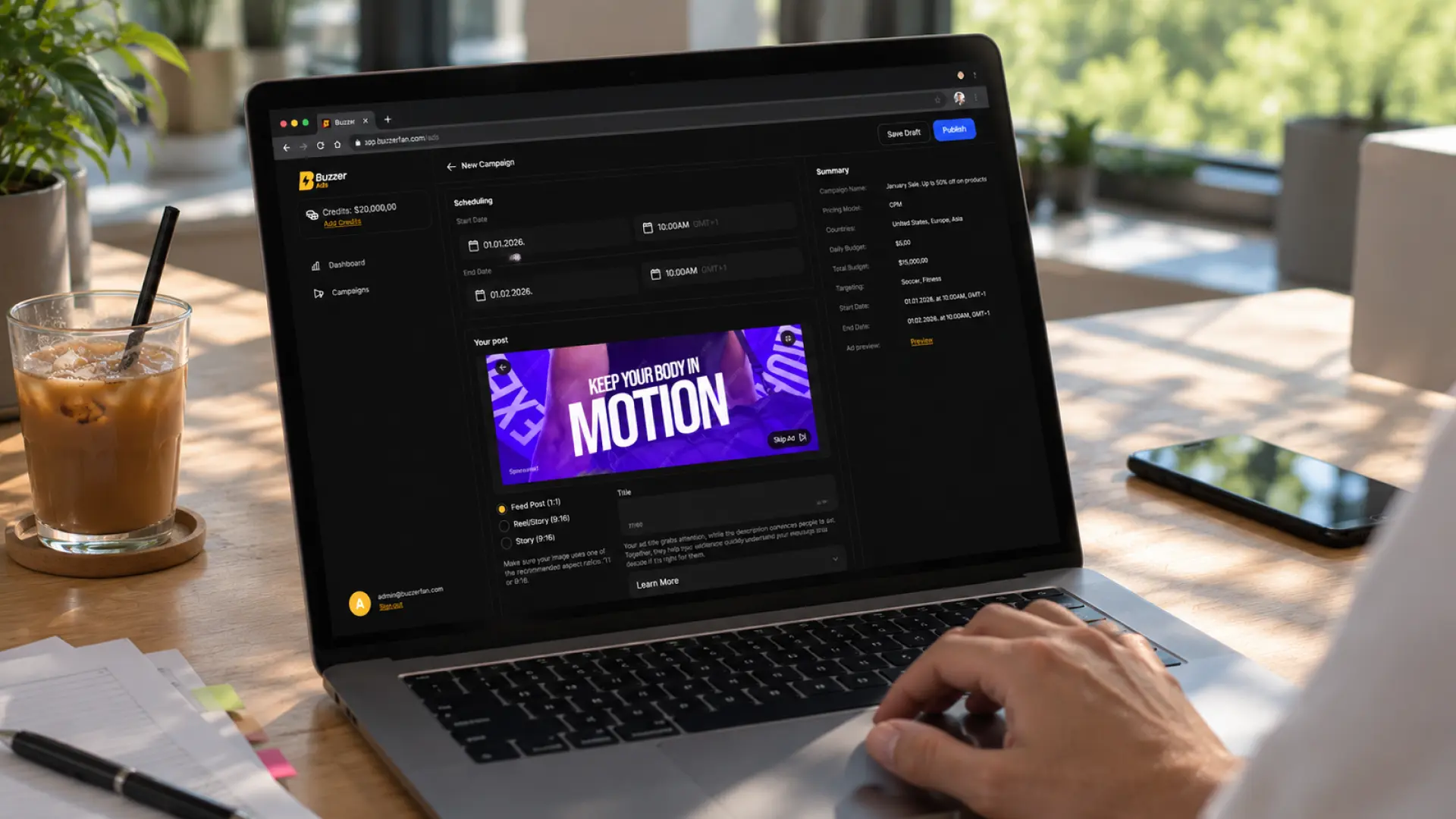
Buzzer Ads is the self-serve side of this choice. Brands set an objective, target sports fans by country, interest and fan behavior, set a budget and pay by CPM, CPC or CPL. Sponsored Athlete Content lets brands work directly with athlete creators, and the Ads Console reports spend, impressions, clicks, CTR and reactions by country.
It isn't a managed service. If you want a team to run everything, you'll want an agency. To see how the self-serve route works, explore Buzzer Ads. For the creator side, read our guides to sports influencer marketing and athlete influencer marketing.
Neither wins every time. Agencies suit large, multi-market or legally complex campaigns where you want someone else to run the work. Platforms suit frequent, smaller campaigns where speed and control matter more.
There's no reliable public benchmark. Common structures include retainers, project fees and markups on creator fees. Ask for a written breakdown of what's included and compare total cost per result.
A sponsorship agency helps brands buy and activate sponsorship rights with teams, leagues, events or athletes. It's a different service from influencer marketing, which focuses on content creators and their audiences.
Yes. Many brands use an agency for a major launch and a platform for routine campaigns. Check your agency contract for who owns the creator relationships and the content.
No. A platform provides tools, not legal representation. On Team USA's AMP, for instance, the payment processor isn't a party to the deal agreement. For large or long deals, arrange a separate contract review.




.png)
.png)
%20(1).png)

%20(1).png)
.avif)
.png)


